
 Tiếng Việt
 日本語
日本語
 简体中文
简体中文
 繁體中文
繁體中文
The Deeper Meaning Behind 5 Traditional Vietnamese Tet Cakes
Banh chung, banh tet, banh khao… are the traditional Tet cakes no Vietnamese family can do without when spring and the new year arrive. Beyond their delicious flavour, these cakes also carry deep meaning about the traditions of the Vietnamese people.
Banh Chung – The Traditional Tet Cake of the Vietnamese Homeland
Banh chung is one of the classic Tet cakes and a beautiful part of Vietnamese culture every time the Lunar New Year comes around. It dates back to the reign of the sixth Hung King. Legend has it that at the start of one year, the king wished to pass his throne to whichever prince could find the offering to Heaven and Earth that pleased him most.
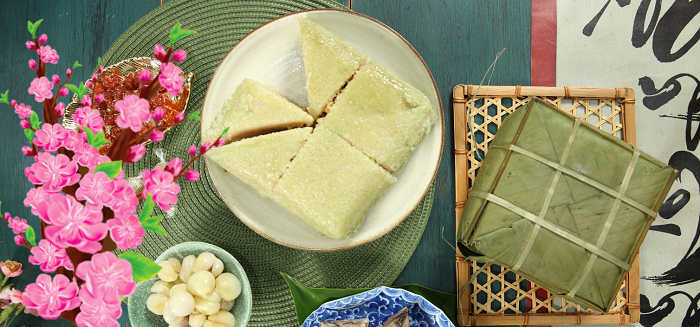
When you see banh chung, you know Tet is here. Photo: monngonqueviet
The princes hurried off to find all kinds of delicacies from the mountains and the sea, the most expensive and rarest dishes they could present to their father. Lang Lieu, however, was the only prince who offered the king a pair of cakes, one round and one square. The king then passed the throne to him. From that day on, banh chung was born and became the traditional cake of Tet.
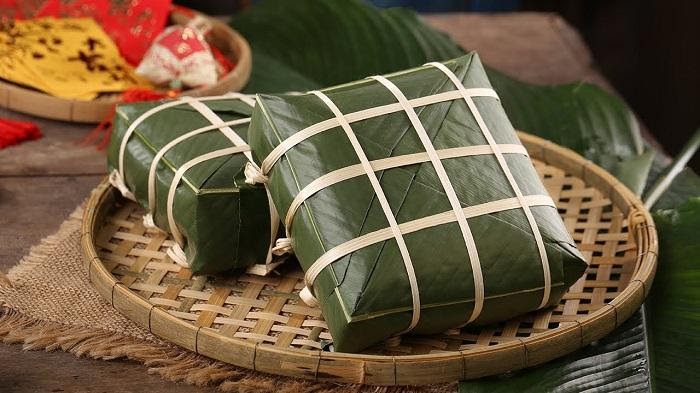
Banh chung is the signature Tet cake that simply cannot be missing. Photo: YouTube.
Banh chung is a traditional fixture of the Vietnamese Tet feast, yet few people really understand what this cake means during the traditional New Year. According to an idea rooted in Chinese culture, the square banh chung represents the earth, while the round banh day represents the sun.
In the past, the Vietnamese people lived by wet-rice farming and depended heavily on nature. That is why banh chung appears on the Tet table: to give thanks to Heaven and Earth for timely rains and gentle winds that bring bountiful harvests and a comfortable life.
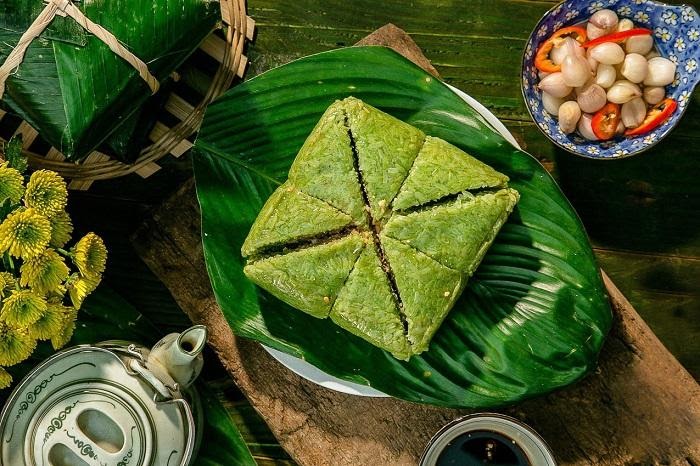
Tet without banh chung just doesn't taste like Tet. Photo: DoanhnhanPlus.
Banh chung also expresses children's filial devotion to their parents and the bond between family members at Lunar New Year. The sight of a family gathered around the pot of simmering banh chung is a beautiful, meaningful image for every one of us. A Tet is never complete without the green of this traditional cake.
Banh Tet – The Signature Tet Cake of Southern Vietnam
No one knows quite when banh tet and banh chung became the signature dishes that the Tet feast cannot be without. If the North has banh chung, the South has its rolls of banh tet. Banh tet originated with the Cham people, and its shape is the image of the Linga in fertility worship. It is not just a traditional Tet cake: it also embodies the theories of yin and yang, the five elements and the three powers (Heaven, Earth and Humanity), through five symbolic colours: the green of the wrapping leaves (pandan, dong leaves or banana leaves) and of the sticky rice coloured during wrapping, the yellow of the mung bean filling, the red and white of the pork belly in the filling, and the black of the pepper mixed into the mung beans or used to marinate the pork.
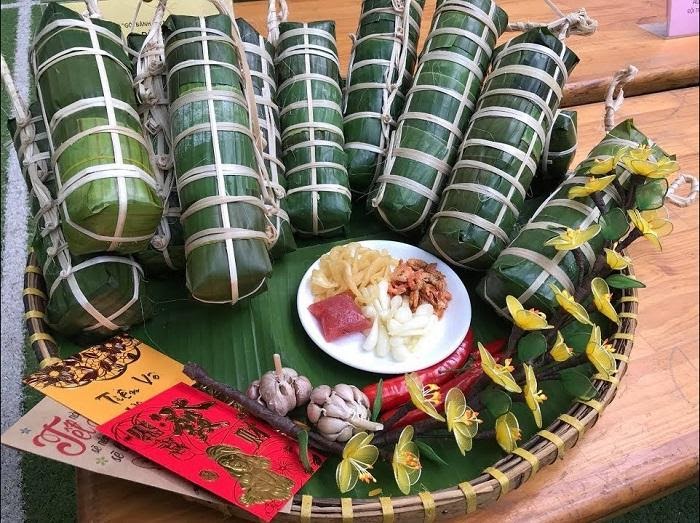
Banh tet, the signature taste of Tet in the South. Photo: YouTube.
Throughout the three days of Tet, banh tet is always on the feast table in southern homes. Because the name "tet" sounds so close to the word "Tết", people believe banh tet is simply "banh Tết" pronounced differently, after the way the cake is eaten.
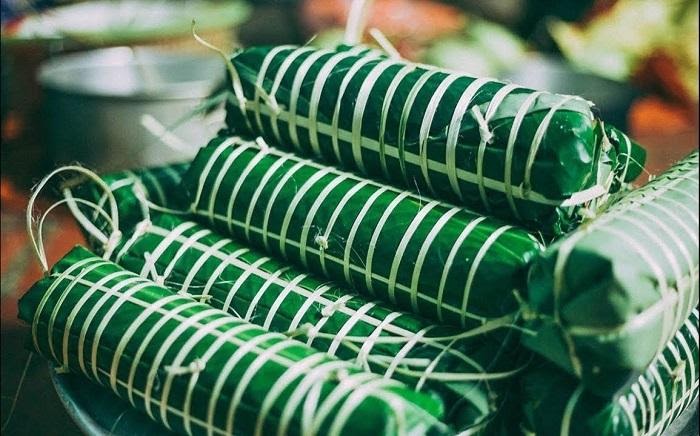
Banh tet stands for family unity and closeness during Tet. Photo: Pinterest.
Banh tet also carries a lofty human meaning. Its many layers of wrapping leaves are linked to the image of a mother holding her child close. Every Tet, eating banh tet makes us think of our mothers, and of how siblings born of the same mother always look after one another.
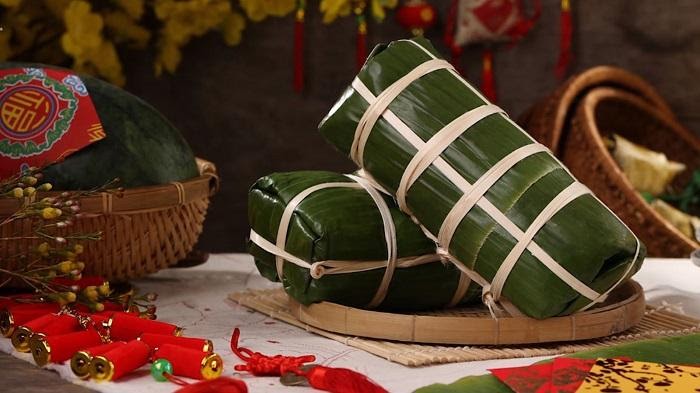
Banh tet is a must on the traditional New Year. Photo: Webtretho.
What's more, the golden mung bean filling calls to mind the green countryside and the farming life of rural people… and with it, a peaceful spring. All of these meanings honour human labour, harmony between Heaven and Earth and between people and nature, and remembrance of our ancestors.
Banh Khao – The Traditional Tet Cake of the Tay People
Since ancient times, banh khao has been known as a travel food of the Tay and Nung peoples in Cao Bang province. It is made mainly for Tet, because unlike other cakes it keeps for a long time without spoiling, going mouldy or turning stale. Making it takes quite a while, since the process is long: roasting the rice, grinding it into flour, letting the flour rest in the ground, pounding the sugar, making the filling, working the dough, pressing it into moulds…
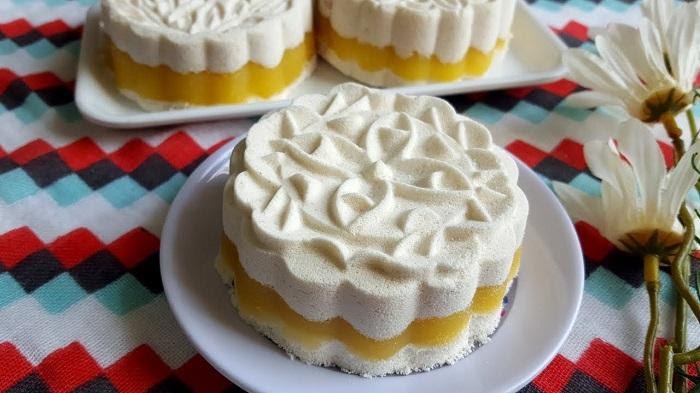
Banh khao, the Tet cake of the Tay people. Photo: Bếp Nhà TV.
The ingredients strike a harmonious balance: glutinous rice stands for Mother Earth, fragrant sesame for harmony and unity, and the sweetness of rock sugar together with aromatic white rice liquor for warm, deep love.

Banh khao carries the rustic flavour of the traditional New Year. Photo: YouTube.
Every Tet, families in Cao Bang set stacks of banh khao on the ancestral altar next to perfectly square banh chung. Visitors who drop by during Tet are offered banh khao by their hosts, both as a sign of hospitality and so guests can enjoy this traditional cake. For newlyweds, banh khao is a must on the first visit to the bride's family.
Banh Phu The – A Vietnamese Tet Speciality
Banh phu the (husband-and-wife cake) is not only served at engagement ceremonies and weddings but also at Tet, and is a gift that symbolises the culture and soul of the Vietnamese people. Legend has it that during the reign of King Ly Anh Tong, his wife, worried for and devoted to her husband, went into the kitchen and made these cakes to send to him at the front. Moved by his wife's devotion, the king named them banh phu the.

Banh phu the stands for love and family happiness. Photo: Ẩm thực Việt.
There are many stories behind the name of banh phu the, and the more meanings it gathers, the more people love it. Its broadest meaning is harmony and warmth in the family and the bond between husband and wife. Traditional banh phu the is wrapped in two kinds of leaves: dong or banana leaves on the inside and pandan leaves on the outside. It must be made with fragrant yellow-flower glutinous rice, combined with a mung bean filling or sesame seeds, coconut and peanuts… to give the cake its eye-catching colours.
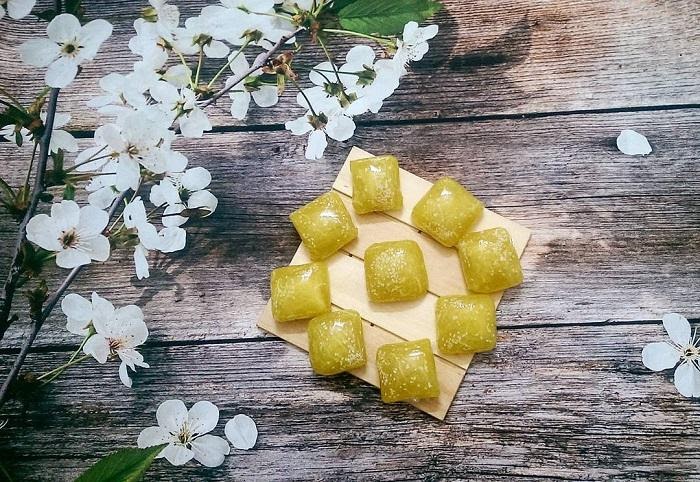
Banh phu the is a Tet cake that cannot be missing at Tet. Photo: aFamily.
For the same reason, this traditional cake often appears at Vietnamese weddings. The mung bean filling is wrapped very carefully inside the outer layer of sticky rice. This symbolises married life: the wife is likened to the soft, sweet mung bean filling inside, protected by the husband, who is the strong, chewy dough outside.
Banh Co – The Traditional Tet Cake of Central Vietnam
Banh co, also known as banh in (pressed cake), is commonly used as a traditional Tet cake and placed on the feast tray offered to grandparents and ancestors. It originated in the royal court of Hue and is known as a speciality of dreamy Hue. Legend has it that once, while relaxing close to Tet, the king wanted something to go with his tea. Knowing the people of Kim Long were skilled with their hands, he had the villagers come up with a cake to offer him. Since sugar and mung beans were local specialities, the villagers combined the two to create banh co.
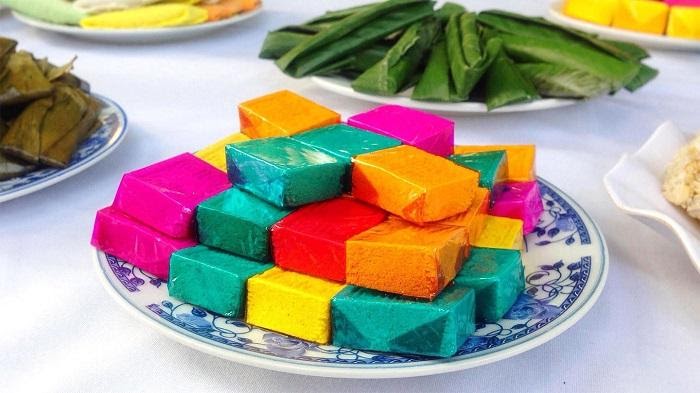
Banh co, a Hue speciality the traditional New Year cannot do without. Photo: Hodadi.
Banh co is made from tapioca starch, glutinous rice flour, mung beans, sugar and other ingredients that give it its lovely flavour. The cakes are pressed in copper moulds, which is why they are rectangular. The mould lids are carved with characters such as Tho (longevity) and Phuc (happiness), or with lotus flowers. In particular, banh co is stacked into towers and wrapped in five-coloured paper, adding unique colour to the feast tray. Some well-known kinds of banh co include banh phuc linh, banh bot dau van (white bean flour cake), banh hat sen tran (lotus seed cake), banh bot dau xanh (mung bean flour cake)…
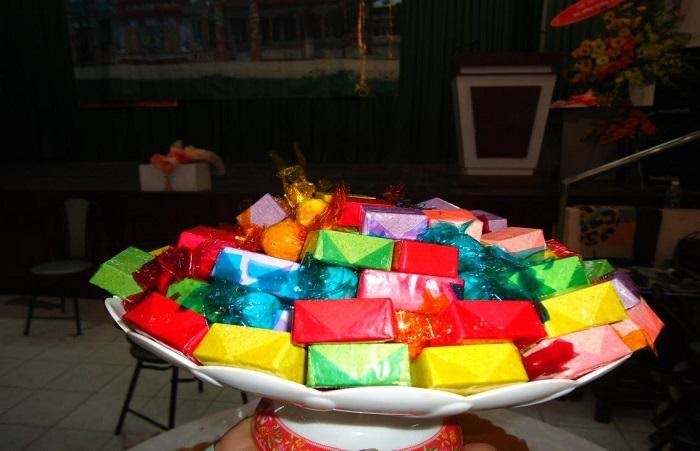
Banh co is always on the Tet sweets tray in Hue. Photo: Foody.
In the old days, banh co offered to the king carried a wish for his long life. Today, banh co has become a must-have speciality in the central provinces at every Tet holiday and wedding, carrying wishes for a peaceful, happy new year.
Traditional Tet cakes are indispensable for families at Lunar New Year. Families use them for ancestral offerings, to treat guests or simply to enjoy during Tet, in the hope of a peaceful, happy and prosperous new year.
Touring Bangkok's Khlong Lat Mayom Floating Market for Its Best Local Food
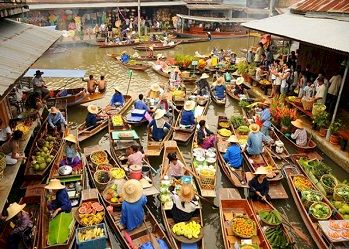
Bangkok is one of the most popular destinations in Thailand, and no visit is complete without a trip to the delightful Khlong Lat Mayom floating market.
Sour Soup with Mud Carp and Sesbania Flowers, a Mekong Delta Flood-Season Specialty
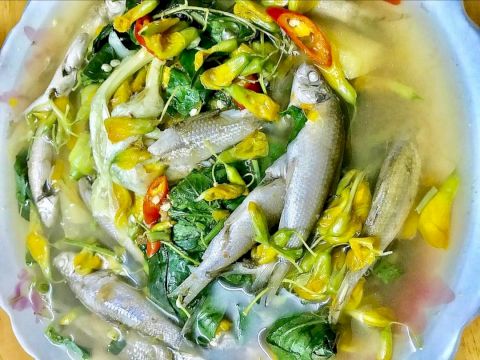
The flood season brings the Mekong Delta not only rich silt but also local produce and rustic dishes that bear the unmistakable mark of the southern countryside, not least sour soup with mud carp and sesbania flowers.
Top 6 Foods to Keep You Warm in Cold Weather
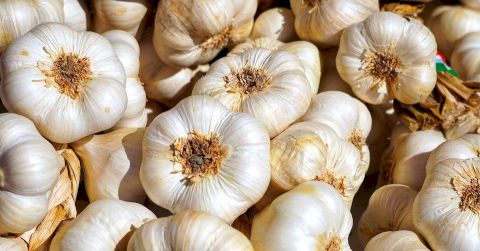
Winter is coming, so it's time to add foods that really keep you warm in the cold season. As well as dressing warmly on cold days, eating the following foods will keep you healthy and help you feel warmer.
Top Easy Vegetarian Dishes for a Hearty Meal
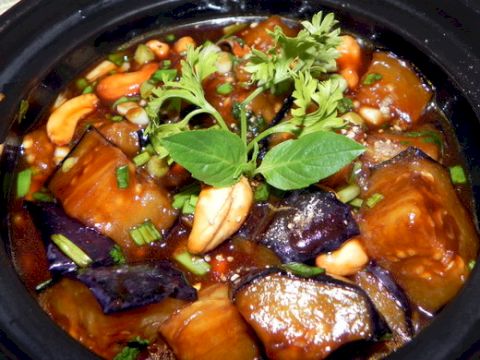
Home cooks always want to make wholesome vegetarian meals for their families, but worry that the dishes won't be new or tasty enough.
How to Make Delicious Vegetarian Stock from Vegetables, Roots and Fruit
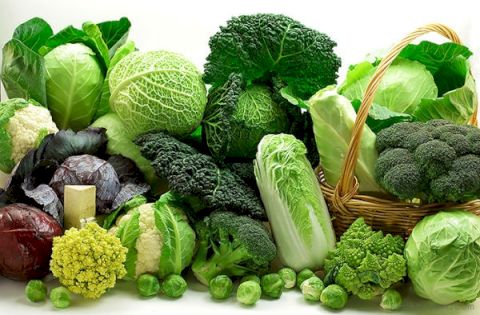
Vegetarian eating is becoming more and more popular, but not everyone knows how to cook tasty, appealing vegetarian dishes. A good stock is the key to a delicious vegetarian dish, so here VN Cooking shares its secrets for making vegetarian stock from vegetables, roots and fruit.
The Most Popular Vegetarian Foods
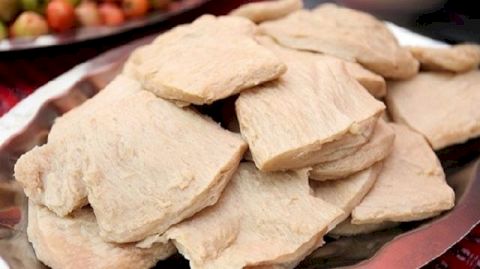
Today many people are choosing a pure vegetarian diet, with their hearts turned towards all that is good. But do you really know the popular vegetarian foods that so many people use? Follow this article from VN Cooking to discover today's most popular vegetarian foods.
Top Unusual Vegetarian Dishes from Around the World
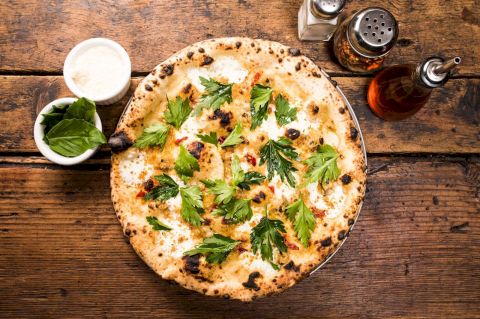
Vegetarian eating is becoming a cherished part of the culture in many countries around the world, and each country's vegetarian cuisine has its own distinctive character.
Unique Vegetarian Dishes You May Not Know
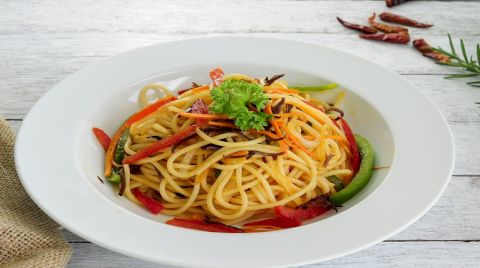
Light, wholesome vegetarian dishes don't just give you a change of taste – they're also very good for your health. Join VN Cooking to discover these unique vegetarian dishes and add variety to your family's meals!
A Round-Up of Tempting Vegetarian Soups